
Think Like A SheEO In this week's Episode of The One Problem Interview, Vicki Saunders talks about creating inclusive environments and communities for women entrepreneurs.
Hi there, my name is Avil Beckford, and this is another episode of The One Problem. I know you know that there are tons of problems in the world, but I want my guests to focus on just one. And they have five to eight minutes to present the issue the solution. And this is a way for all of us to learn from each other.
My special guest today is Vicki Saunders. I met her before 2015. So I think it was 2014, somewhere around that time. And I've been to many of her events. I'd like to introduce her to my listeners. She's the founder of SheEO. So over to you.
Vicki Saunders
Thanks so much. So, hi, everybody. It's very hard for me to just come up with one problem. I can think of so many, but the thing I really want to focus on today is how do you create more inclusive environments and communities for women entrepreneurs? And this is something we've been thinking about a lot, actually since the very beginning [of founding SheEO]. How do we include people that have often been put to the margins by the systems and structures that we have in place?
And I use that framing, put to the margins, not marginalized because it's not like they've done something for that to happen. We have put so many people to the margins. In fact, there are very few people at the center if we really focus on what the systems and structures have been created for. This is something that has been a real focus for us at SheEO from the beginning. And one of the things that I do as a leader is follow the energy.
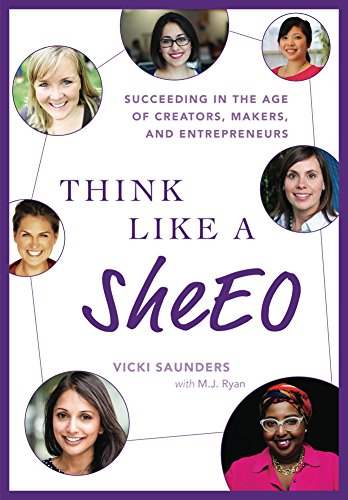
[Think Like A SheEO by Vicki Saunders and MJ Ryan, Book Review]
The One Problem Interview: Vicki Saunders Talks About How to Create More Inclusive Environments and Communities for Women Entrepreneurs
It's a phrase that we use all of the time. And so part of the thing is showing up as a leader and then seeing what is coming your way as you put messages out into the world. And around early 2018, one of our activators who is indigenous, Teara Fraser, came to me and said,
“I am absolutely obsessed with creating the conditions for indigenous women to thrive and indigenous women in business to thrive. Let's do something. Should we do a SheEO only for indigenous women, like actually create a separate container for that? Or what could we do?”
And we talked a lot about what she was seeing as challenges in the community, how we could help. And we circled a lot, like we talked a lot to try to find the right place to start, because for me, the design really matters. The structure really matters because that creates the outcomes. And we talked, and we talked until we got tired talking about a year later, which is like, let's just start, let's do calls.
Have you read or watched?
- Episode 16 The One Problem: Tara Hunt, Founder Truly Inc
- The One Problem Interview: Melanie Russell Talks About Partnership Agreements
- The One Problem Interview: Anthea Rossouw, Founder of Dreamcatcher
- Germain St. Denis, Consultant, Change Leadership: The One Problem Interview
- The One Problem Interview: Sandra Lisi, Leadership Coach
- The One Problem: Deena Baikowitz, Business & Career Coach
- The One Problem: Kelli Wingo, The One Problem Interview: Kelli Wingo, KMW Catalyst
- The One Problem: Patricia Roberts,Chief Operating Officer of the Gift of College
- The One Problem: The One Problem: Patti Pokorchak, Small Biz Sales Coach
- The One Problem: Adrienne Harris, Managing Partner, Portage Sales
- The One Problem: Kristy Wallace, CEO Ellevate Network
- The One Problem: Margye Solomon Talks about Aging and Relevance
- The One Problem: Deb Boulanger, Launch Lab for Women Entrepreneurs
- The One Problem: Sharon Horne Ellstrom – Stop Being Like Others, Be YOU
- The One Problem: Liz Kitchell from SheMoolah Talks Money Conversations
- The One Problem: Avil Beckford, Author of Digest 30 Books in 30 Days
- The One Problem: Interview With Kelly Daring, Author of Is Love Enough
Vicki Saunders
And so we decided to do this thing that we do at SheEO all the time. It's called Ask/Give. And it's just practicing, asking for what we need and giving to one another. We started doing calls every Sunday last March just before the pandemic or late last February. So we'd meet every Sunday and I would be on these calls for an hour and Teara would be on these calls for an hour, and she would invite her community of indigenous women entrepreneurs.
They came and we talked about what happens at the SheEO community and asking for help. And many people were like, I don't have an ask, but I could give all these things, which is classic, what women do. Right. We're like, I have all these things, we give, give until we're totally depleted because we're really conditioned not to ask. And so we really built the muscle over time, showing up each week, encouraging people to ask, and then they brought their friends as they saw the impact in this. And it grew to almost two hundred women now, in the last year, have shown up, indigenous women entrepreneurs and people asked for gifted activations into SheEO.
Vicki Saunders
Then they got involved in the community more broadly, which is a well resourced community where we really like to share. As they got the support they needed, shared their crowdfunding campaigns or their giveaways or whatever it is that they were doing with their business, activators showed up as customers and as supporters and opened doors for them. And a lot of them grew their businesses and got to that sort of threshold that we have of $50,000 in revenue to apply to be funded as a venture.
This year, out of that community, five of those indigenous women activators were selected to be funded. So this is something that we would really like to explore across other racialized groups, who may be keen on doing this. And so we've been talking about doing this with women activators in the black community, who would be keen on this. We have an Indian entrepreneur who's funded, Nita Tandon, who's really passionate about bringing Southeast Asians into this community as well.
So it's a way of actually reaching out to different groups of communities, creating space for them to sort of touch and feel what this looks like, before stepping into the SheEO community. We've really transformed a lot, I would say, in the last few years. And we're much more diverse, racially diverse as a community than we used to be. It's been through deep intention of being together in relationship, building those relationships, taking time.
Vicki Saunders
We talk about building at the speed of trust at SheEO. And I just want to say as a final point, it's one of the things I didn't appreciate a couple of years ago is that looking like I do a white, cisgendered woman, and saying I care about these issues. People are like, oh, sure, sure you do. It's like there's not necessarily trust because I look like the problem in many ways. And so it's only by continuing to show up, and showing up every single week on these calls, there was at some point people realize you obviously really cares about this.
She's here every Sunday for an hour listening, supporting, opening her network and helping. And I think that's the building at the speed of trust. When you do that, then others can spread the word and others take you seriously and believe you because of the action. And this is something that we're very careful about at SheEO. We don't send out waiting lists for all these different options. We do the action, and then we say what we did after. And we don't set it up as intentions, saying we're going to find more black women entrepreneurs this year.
We fund black women entrepreneurs, and then we talk about it after. Like this year, we had an entire African American cohort in the US. The entire cohort is African-American, which was absolutely amazing. That's how our activators voted upon us. And so for me, it's very much action oriented, get into the relationship, build trust and grow from there. So I hope that's helpful to your community.
Avil Beckford
Actually, that's really good. And I love the idea of the ask/give, because last year when the pandemic hit, SheEO had those weekly meetings that I went to. So it's a powerful concept and sometimes it was so difficult for me to ask. And that's the problem with women. And now I'm learning to ask for what I need and a lot of times I actually get it.

Vicki Saunders
I think we're taught this sort of lie that there's not enough, people are too busy, they don't want to help. But every single time I'm in a room full of women, I'm like, if somebody asks you for help right now, would you help? And everyone's hand goes up. But then when I ask who likes to ask, nobody's hands go up. So we're really conditioned not to ask, to stay isolated by ourselves, which then keeps us small, makes us think that there is more scarcity and leaves a lot of us feeling alone. And so this has been the biggest unlocking factor, I think, in our community to really come into these spaces to ask for what you need.
Some people don't even know what they need, which is fine. That's an ask, too. I don't even know what I need help with. And so thank you. Yeah, it's this practicing of asking and giving is a deconditioning from colonialized systems that have really blocked us from reaching our potential and getting what we need. And that's one of the transformations that we experience SheEO.
Avil Beckford
This has been so good. So, thank you so much.
The most accomplished people use books as problem solving tools. They carve out the time in their schedule to find solutions in the pages of a book. Let me help you to solve your own problems. Additionally, this program helps you to learn valuable career skills. Click the link MoreReads Success Blueprint Accelerator Program to buy.
This post contains affiliate links and The Invisible Mentor® may earn commissions for purchases made through links in this post. For more details see here. Thank you so much for your support!
