
Route 529 Hi there, my name is Avil Beckford, and I started a new series called The One Problem. I invite people to come and talk about one problem, not all the problems in the world, just one. They present the problem, and they'll have five to 10 minutes to offer us their solution.

Today, my special guest is Patricia Roberts. I met Patricia about a year ago, and she's another Ellevate Network sister, and she is also the Chief Operating Officer of the Gift of College. Patricia, I'll turn it over to you now.
Patricia Roberts
Well, thank you so much, Avil. Thank you for having me. I'm excited about this platform you've created, and I'm very honored to be here with you today. So the one problem that I would like to discuss today is student loan debt. Here in the United States, over 44 million individuals are encumbered by one point six trillion dollars in student loan debt. And those numbers are growing. And I am on a mission to help future students achieve their career and educational dreams without the crushing weight of student loan debt.
And why am I passionate about this particular topic? I would like to share that. It is higher education that helped me lift myself and my mom and siblings out of poverty. And I believe firmly that higher education opens doors not only to careers but to better lives, not only for ourselves, but for those we love. I know some are not as lucky as I was to be able to pursue higher education. And in fact, many possible students never pursue it because of cost.
Interview With Patricia Roberts Talking About How to Graduate Without Student Loan Debt
Patricia Roberts
And as a result, they don't have a chance to improve their lives in the substantial ways that they possibly can. Beyond this some continue on to pursue higher education. But because of the cost and student loans, they wind up dropping out midstream. And this is the worst scenario of all, in my view, because they wind up encumbered by student loan debt with no degree to show for it and no chance in many cases to advance in their career.
And then there are the others who do achieve higher education, but they wind up suffocated in debt for 10, 20, 30 years. And in some cases, here in the United States, people are reaching the end of their lives, and they still haven't paid back their debt. And for students who come out with so much debt, they really have trouble achieving adult milestones. Oftentimes, they can't move out of their parent's home.
They certainly can't begin to save for retirement if they don't have a job. And in many cases, they don't qualify for mortgages and can't begin a life that they deserve. So for all these reasons, I want to offer several ideas about how to reduce or minimize this debt. But I'm so concerned about and it takes a village to do it.
Have you read?
- The One Problem: The One Problem: Patti Pokorchak, Small Biz Sales Coach
- The One Problem: Adrienne Harris, Managing Partner, Portage Sales
- The One Problem: Kristy Wallace, CEO Ellevate Network
- The One Problem: Margye Solomon Talks about Aging and Relevance
- The One Problem: Deb Boulanger, Launch Lab for Women Entrepreneurs
- The One Problem: Sharon Horne Ellstrom – Stop Being Like Others, Be YOU
- The One Problem: Liz Kitchell from SheMoolah Talks Money Conversations
- The One Problem: Avil Beckford, Author of Digest 30 Books in 30 Days
- The One Problem: Interview With Kelly Daring, Author of Is Love Enough
Patricia Roberts
So, I want to talk and really direct my comments to several groups of people. First of all, parents, parents of future students, start saving now. Now is the time. It is never too early, and it is never too late to start saving. I saved a little bit at a time for my son out of my paycheck at work after he was born. And I'm so happy to say after all of those years, he's going to graduate from college debt free.
It was hard to get started, but I'm so glad that I did. And it really made a difference. Sometimes if you take it out of your paycheck, you don't even notice it if it doesn't cross your hands first. So that's one suggestion I have. And it's never too late to start. Don't worry if you didn't start that early. Just get started because any amount that you can save for your child is that much less that they will need to borrow and repay with interest.
So do the best you can with that but get started. And then my second group, I want to address is our friends and extended family of future students. So, these are the individuals that love the children in their lives, they're not their children. But maybe it's aunts and uncles and godparents and just friends and family. You have 18 occasions from the child's birth to the time that they graduate high school to celebrate their birthdays. You probably have another 18 occasions to celebrate at least one holiday a year.
Patricia Roberts
And I bet there will be many other milestones. Instead of buying things like stuffed animals and cute little outfits that are adorable but quickly outgrown, or toys and games that clutter up the parent's home. Consider contributing, asking the parents if you could help save for higher education, any amount that you can contribute in that regard can be really helpful to both that child and to their parents.
And then I want to talk to the students themselves. Sometimes when students get close to graduating from high school, they get attached to a dream school, a college or university that they absolutely want to attend and have to attend in their own view.
I went to encourage students to keep an open mind, don't get attached to just one school because that one school may be your dream, but it may be a dream that you and your parents simply cannot afford and that you would have to wind up borrowing a tremendous amount of money. So keep an open mind about other options. There are many excellent colleges and universities in the US and across the world, so don't get tied to just one.
Consider looking at other options that may be less expensive, that might offer you scholarships or more financial aid. And consider perhaps starting at a less expensive institution for one or two years and then transferring to that dream school, if that's what you really want, because you can cut costs almost in half.
Patricia Roberts
And then the other bit of advice I have is please graduate on time. Sometimes students take longer than the traditional four years for a four-year degree. Each additional day and month and year that you're at your university is going to cost you extra so try to stay on a time frame. And then lastly, I want to appeal to employers. Employers typically help their employees in many ways regarding wellness. They help them with medical benefits, sometimes retirement benefits. Sometimes they even match retirement benefits.
I encourage employers to start thinking about helping their employees save for higher education for either themselves or their children. Sometimes employees want to improve themselves and get additional degrees. Oftentimes they have loved ones that they're saving for. Employers can help in this regard and I really encourage them to consider doing so because these issues of higher education costs weigh heavily on the hearts and minds of employees. And if they're distracted by worries, they're not focusing as much on the job as they possibly could be.
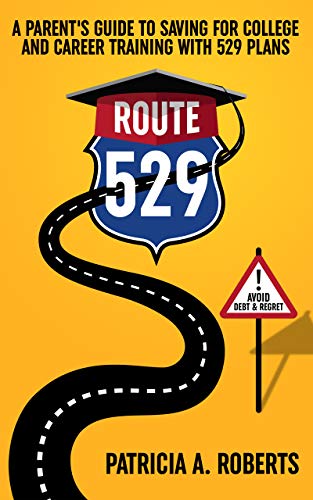
Show you care, educate them. If you're in the U.S., you can educate them about 529 college savings plans. I've written a book on this, and you can help contribute to whatever type of education account they set out. So, Avil, I hope that this information helps many to achieve their educational dreams or to help the loved ones in their life do so and to do so without debt and regret. So thank you for having me.

Avil Beckford
I am stunned by some of your statistics and I really don't know what to say. But all I know is that some of the information, all of the information that you have given so far, they will find useful. Particularly I like a couple, the one about friends and family giving money to the education instead of other kinds of gifts, and the appeal to employers. So, thank you so much.
Patricia Roberts
I realized I concluded my final remarks before mentioning one additional recommendation for U.S. employers: Consider contributing up to $5,250/year toward employee student loans — now that this can be done tax-free and as a deductible business expense —thanks to recent changes to Internal Revenue Code 127 Educational Assistance Programs. I’d be happy to provide additional information for employers who may be interested.
The most accomplished people use books as problem solving tools. They carve out the time in their schedule to find solutions in the pages of a book. Let me help you to solve your own problems. Additionally, this program helps you to learn valuable career skills. Click the link MoreReads Individual Leadership Development Program to buy.
This post contains affiliate links and The Invisible Mentor® may earn commissions for purchases made through links in this post. For more details see here. Thank you so much for your support!
