
How to Read Literature Like a Professor Why would a professional care about reading like a professor? The reality is that you are working in an increasingly global work place. And one of the easiest ways to understand people from different cultures is to read global fiction. But the best written fiction often take a bit of brain work to understand the deeper meaning. In How to Read Literature Like a Professor, Thomas Foster helps us to go deeper to interpret & understand literature. You'll find hidden meaning.
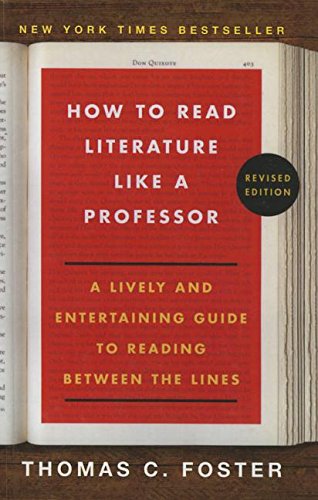
Learning how to read books, is a skill that you will use throughout your life. Professor Thomas Foster wrote an excellent book, How to Read Literature Like a Professor. When I bought the book a few years ago, I assumed it would be dry and difficult to read. But that was not at all how the experience was for me. After you have read the book, you will never read fiction the same way again.
Book Pairing
How to Read Literature Like a Professor How to Read Nonfiction Like a Professor

Reading a book summary is an excellent way to get the key concepts from business books. It’s also a great way to decide which books to buy to explore more deeply. Click the Readitforme link to join. Think of this subscription as your speed-reading superpower. You read the summary, therefore, you can digest and process the book faster.
Below, you'll find my notes on How to Read Literature Like a Professor by Thomas Foster.
Initial Thoughts: Reading like a Professor – How to Read Literature Like a Professor
How to Read Literature Like a Professor
 by Thomas C. Foster is a great book because after you have read it, you will never read the same way again. It teaches you how to question things. It was the most impactful book for me in 2011!
“Reading is an activity of the imagination, and the imagination in question is not the writer’s alone…In this activity of reading and understanding literature, we’re chiefly concerned with how that story functions as material for literary creators, the way in which it can inform a story or poem, and how it is perceived by the reader.”

Have you read?
Learning How to Read Books: What’s the Best Way to Read a Book?
Reading like a Professor: What is How to Read Literature Like a Professor About?
I thought that I would find How to Read Literature Like a Professor by Thomas C. Foster quite boring and academic. But I quite enjoyed it. For people who haven’t studied literature in college – and that includes me – after you read How to Read Literature Like a Professor, you will never view literary fiction the same way again.
How to Read Literature Like a Professor is a solid guide, which increases your understanding of literary fiction. I found the ideas and numerous examples quite helpful. To truly understand literary fiction, especially the well-written ones, first you have to know something about the author, and you have to ask a lot of questions. You have to constantly ask:
- What does this mean?
- What’s its significance in the story?
When you dig beneath the surface of the story, a whole new world opens up to you and you have a richer experience. Most of us in the western world are very familiar with the nursery rhyme Jack and Jill.
“Jack and Jill went up the hill to fetch a pail of water
Jack fell down and broke his crown
And Jill came tumbling after.
Up got Jack, and home did trot
As fast as he could caper
He went to bed and bound his head
With vinegar and brown paper.”
I remember learning that poem in primary school, but I do not remember any deeper meaning to it. Here is some of Foster’s analysis:
“Hills and valleys have a logic of their own. Why did Jack and Jill go up the hill? Sure, sure, a pail of water, probably orders from a parent. But wasn’t the reason so that Jack could break his crown and Jill come tumbling after? That’s what it usually is in literature. Who’s up and who’s down? Just what do up and down mean?…First think what’s down low or up high. Low: swamps, crowd, fog darkness….High: snow ice, purity….”
Who would have thought that one nursery rhyme could be so loaded with hidden meaning? That's why learning to read books is so important. You may not truly understand what the author is trying to tell you through his words.

Learning How to Read Books: How to Read Literature Like a Professor Chapter Titles
- Every Trip is a Quest (Except When It’s Not)
- Nice to Eat With You: Acts of Communion
- Nice to Eat With You: Acts of Vampire
- Now, Where Have I Seen This Before?
- When in Doubt, It’s from Shakespeare
- ….Or the Bible
- Hanseldee and Greteldum
- It’s More Than Just Rain or Snow
- Does He Mean That?
- Is That a Symbol?
- If She Comes up, It’s Baptism,
- Geography Matters
- …So Does Season
- He’s Blind for a Reason
- Don’t Read With Your Eyes
The film Oh Brother Where Art Thou has parallels to the wandering of King Odysseus in Homer’s Odyssey. The three convicts in the film are trying to get home. And so is Odysseus after fighting in the Trojan War. The recognition of that parallel suddenly changes the reader’s experience. I would not have seen it had Foster not pointed it out.
Flying means freedom, so that means that it could be freedom from the things that tie us down. Rain often has a cleansing effect. And, writers take great pains in naming characters in their work, so there is great meaning in the names. If the character’s name is Daisy, Daisy is a spring flower, so what does the season spring means in literature? You constantly have to drill down to get clues. If people are eating a meal together, what does that mean? Eating is a shared experience, so what are the characters sharing? What are they going through together?
Reading like a Professor: Understanding the Hero's Journey
Many works of fiction have the main character going on a quest – the hero's journey. In How to Read Literature Like a Professor, the author breaks down a quest into its components. The quest consists of five things:
- Quester.
- Place to go.
- Stated reason to go there.
- Challenges and trials en route.
- Real reason to go there.
Reading Literature Like a Professor: 7 Great Ideas Worth Exploring
- The reason for a quest in a story is self knowledge.
- There is no such thing as a wholly original story work of literature.
- There is only one story – stories grow out of other stories, poems out of other poems, plays out of other plays, and they also cross genres.
- Myth is a body of story that matters.
- Flight is freedom.
- When writers send characters south, it’s so they can run amok.
- Don’t read with your eyes.
How to Read Literature Like a Professor: Questions to Ask While Reading Literary Fiction
- Where have I seen this situation before?
- What does this type of misfortune represents thematically?
- Where did that effect come from?
- Whom does this character resemble?
- Is this a metaphor? Is it an analogy?
- What famous or mythic death does this resemble?

Reading like a Professor: Should You Buy How to Read Literature Like a Professor?
You have to question everything. How to Read Literature Like a Professor is very illuminating. I now see some of the books that I already read in a new light. While reading the book, I was reminded how I felt when reading Og Mandino’s books, The Greatest Salesman in The World and The Greatest Salesman Part II . It was the classic case of where have I seen that before. In the first book, I recognized Mother Mary and Baby Jesus and in part two, I recognized Paul on the road to Damascus. I recognized the stories because of my religious upbringing. So even though Mandino did not use names in the story, I recognized who the characters were because I had seen that type of story before.
This is important for you, because nothing is really new. And it's important to connect new information with what you already know. Or with what is familiar to you. How to Read Literature Like a Professor helps you to do that. Reading like a professor helps you to understand literature – at a much deeper level. But it also helps you to understand the context, so you are able to put things into perspective.
If you read a lot of mythology, you will recognize the gods, goddesses and other mythical characters in stories that have parallels. How to Read Literature Like a Professor by Thomas C. Foster is a book that I will constantly refer to. I cannot really do justice to the book because you have to read it for yourself, there is simply too much information packed inside.
The most accomplished people read books every day. They carve out the time in their schedule. When they face a problem, they often find the solution embedded in the pages of a book. Let me help you to solve your own problems. Click the link MoreReads: Blueprint to Change the World to buy.
Reading List: Best Books to Get the Most from Reading

Learning How to Read Books: Best Books To help You Get the Most from Reading
How to Read Literature Like a Professor How to Read a BookHow to Read Novels Like a ProfessorHow to Read and Why


&
Have you read?
- Booked on Tuesdays: Musings of a Book Addict – and the Most Impactful Book for 2011 Is…. (theinvisiblementor.com)
