
Chester Carlson is in an IBM boardroom explaining his invention. He does a demo for them, but these men in suit don’t understand his concept. Neither do they see any value in it. Chester Floyd Carlson invented the photocopying process. He is not daunted by this rejection. He pushes on, and today we take the photocopier for granted.
Don't let rejection prevent you from doing the things that you believe in and are important to to you. Think of the rejection as feedback to make changes. If you get knocked down six time, pick yourself up seven. Think of a problem that needs solving and work on it. You could be the next Chester Carlson.
Copies in Seconds Chester Carlson and the Development of XerographyThe Innovation Stack

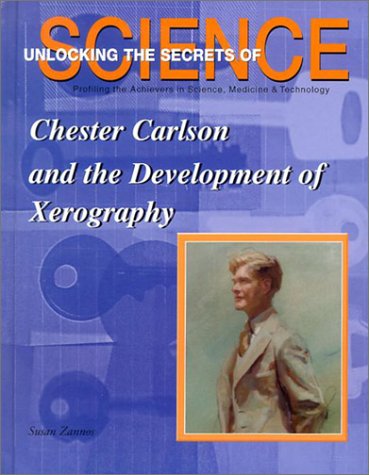

 Name: Chester Floyd Carlson
Birth Date: February 8, 1906 – September 19, 1968
Job Functions: Physicist, Inventor, and Patent Attorney
Fields: Electrophotography, Xerography
Known For: Invented the Photocopying Process
Timeline: Invented Xerography in 1938 and first machine became available in 1959
Problem
Chester Carlson tried to typeset and publish a magazine for science minded students like himself while he was in high school. And he became aware of the limitations of available duplicating techniques. This got him thinking about how to do it better. At the time, you had to create a master copy before you could make copies, which often proved very expensive and time consuming.
Solution
Chester Carlson had a vision and wanted to invent a machine that would take an existing document and copy it directly to a piece of paper.
Chester Floyd Carlson: The Long Journey
Carlson always carried around a notebook with him because he never knew when an idea would strike. While working at Bell Labs, he wrote 400 ideas in his personal notebook. But he kept on thinking about printing which was his passion. While working in the patent department at Bell Labs, there was a constant need for copying documents. But there was not an easy way to do it. Typists had to retype the documents and use carbon paper to make multiple copies.

He was fired from Bell Labs which turned out to be a blessing. Carlson subsequently landed at electronics firm P. R. Mallory Company, founded by Philip Mallory (now known as the Duracell division of Procter & Gamble). He was promoted to head of the patent department. Life was not easy for Carlson and he was living from paycheque to paycheque.
He enrolled at New York Law School studying law at nights. Because he couldn’t afford to purchase the text books, he copied the information by hand. This strengthened his resolve to find a solution to the duplicating dilemma. One day while he was at the Public Library, he found an article in an obscure German scientific journal written by Hungarian physicist Pál Selényi which showed him a way to invent his photocopying machine. The light bulb went on for Carlson.
He experimented in the kitchen until his wife convinced him to conduct his experiments elsewhere. Along with Otto Kornei, an out-of-work Austrian physicist, who he hired as an assistant, they worked and had some breakthroughs. But they weren’t enough for Kornei who dissolved the partnership. Carlson was not daunted by the desertion and kept at it. After a long journey filled with many failures along the way he tasted success.
He tried to sell his invention to IBM, but they didn’t understand the concept and saw no value in it. He didn’t have any luck with RCA or GE. Battelle Memorial Institute took a chance on the invention and acted as agent for his patents.
They signed an agreement with the Haloid Company to license electrophotography for a commercial product. Haloid changed the name of the process electrophotography to xerography. And in 1959, the Xerox 914 was introduced. The journey to market took close to 21 years after the original invention, but success was sweet.
Chester Carlson never forgot the help he received from his previous partner Otto Kornei, so years later, when Xerox’s stock was soaring, Carlson sent him a gift of one hundred shares in the company.

Key Lessons from the life of Chester Floyd Carlson
- Success seldom occurs overnight
- Chester Carlson understood how patents worked so he documented all the steps he took along the way, and registered the patent when it was the right time.
- He was persistent, picked himself when he failed, got rejected for funding and got turned down when he tried to sell his invention.
- Carlson appreciated those who helped him.
- He believed in himself and what he was doing. His passion got him through the tough times.
- Most inventions are a result of problems that need resolving. Necessity is indeed the mother of invention.
- Carlson didn’t have a privileged background. He was the main financial supporter of his family at age 14.
- Read something everyday, you never know what you might find.
How You Can Support Avil
Digest 30 Books in 30 DaysI have two products that will help you to be smarter than your peers. One is a book that you can purchase on Amazon. And the other is the MoreReads: Blueprint to Change the World program I created to help you learn the skills the World Economic Forum says you need to thrive up to 2025. You can buy the program on my website.MoreReads: Blueprint to Change the World


For the MoreReads program, you'll go through the process of picking out the big ideas from the books you read. And you'll also learn how to combine ideas to make them bigger and better.
You're encouraged to always tie the ideas to a human need – a hot button. I advocate that professionals profit from their reading time. Click on the link in the yellow box below or the Buy Now link to the left to buy the MoreReads program. Thank you for supporting me and my work.
The most accomplished people use books as problem solving tools. They carve out the time in their schedule to find solutions in the pages of a book. Let me help you to solve your own problems. Additionally, this program helps you to learn valuable career skills. Click the link MoreReads: Blueprint to Change the World to buy.
Reading List for Chester Carlson
Copies in Seconds Chester Carlson and the Development of Xerography
Sources Referenced
Chester Carlson and the History of Xerography
If someone clicks on a link and buys something from Amazon, the company will pay me a small commission. First published in March 2011.
