
Tupperware Unsealed: Brownie Wise, Earl Tupper, and the Home Party Pioneers

A leader doesn't have to hold a leadership position. This mini biography of leader, Earl S. Tupper, is meant to assist you in developing the leader in you. You can learn from him by studying how he lived.
In 1938, Tupper founded Earl S. Tupper Company, and asked DuPont for some polyethylene slag. This is a waste product of the oil refining process, so that he could experiment. He invented a revolutionary, improved plastic, called Poly-T that was translucent, white, flexible, lightweight, odorless, non-toxic, and not greasy to the touch.

Name: Earl Silas Tupper
Birth Date: July 28, 1907 – October 03, 1983
Job Functions: Inventor
Fields: Manufacturing
Known For: Inventing Tupperware
Application of Ideas That Matter – Developing the Leader in You
- Use your experience to create something new.
- Experiment and find new ways of doing things.
- No one knows everything. Listen to those around you and evaluate what they say and then make a decision.
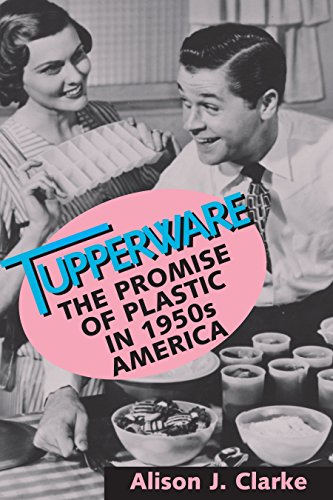
Tupperware Unsealed: Brownie Wise, Earl Tupper, and the Home Party PioneersLife of the PartyTupperware: The Promise of Plastic in 1950's America

Earl Tupper’s Steps to Success
- Earl Tupper was interested in business and making money from an early age. He discovered that he could earn more money selling produce from their farm if he went from door-to-door rather than at the farmer's market. From an early age, he recognized the importance of taking the product to the customer.
- Worked in the family business until age 19. Also worked as a mail clerk and railroad labor crew.
- Vowed to become a millionaire by age 30.
- Took a course to learn tree surgery to start a business tending trees and landscaping.
- Tupper Tree-Doctors Company was moderately successful and remained in operation for six years. He operated the business during the Great Depression.
- At age 30 he was forced in bankruptcy, instead of becoming a millionaire.
- In 1936, after declaring bankruptcy, Tupper met Bernard Doyle, an inventor working at the plastics manufacturing division of the DuPont Corporation.
- Became interested in plastic, worked at a plastics plant conducting experiments prior to World War II. He worked for DuPont for only a year.
- In 1938, Tupper founded Earl S. Tupper Company, and asked DuPont for some polyethylene slag, a waste product of the oil refining process – he wanted to experiment.
-
Invented a revolutionary, improved plastic, called Poly-T (Polyethylene-Tupper) that was translucent, white, flexible, lightweight, odorless, non-toxic, and not greasy to the touch.
- Subcontracted work from DuPont.
- Made most of the money producing molded parts for gas masks and signal lamps for the U.S. Navy during World War II.
- After the war, changed the company's focus to the consumer market. Made items such as plastic sandwich picks, unbreakable drinking tumblers, and plastic cigarette cases, which were often packaged with well-known products and were complimentary.

One of the Tupperware's Ultraplus line product (Photo credit: Wikipedia) - Tupper focused on creating a new line of plastic food storage containers that would hold foods “air tight” in the refrigerator. Called the new line Tupperware.
- Distributed them in department and hardware store. The products were not popular because of the bad reputation of other plastics. Customers didn't understand the benefits of the Tuppeware line without a demonstration.
-
Also distributed Tupperware through private household product companies, such as Stanley Home Products (See Profile of Mary Kay who worked for Stanley Home Products).
- Some of these salespeople were selling such large quantities of Tupperware that Tupper noticed.
- Stanley Home Products saleswoman, Brownie Wise, suggested that Tupper develop a marketing strategy modeled after the Stanley Home Product Company's in-home selling parties.
- Several Tupperware distributors encouraged him to remove his products from department stores, and pursue direct-marketing to the buyer using the “home party.”
- The idea was to demonstrate the products in the home of a person who sponsored a “Tupperware party,” where all questions about the products could be answered, with a party-like or social gathering type of atmosphere. The women played games and could win prizes and the hostess tried to recruit women to host their own parties.
- Brownie Wise became vice president of the company Tupperware Home Parties in 1951, and remained in that position until 1958.
- Home demonstration parties have remained the primary outlet for Tupperware.
- In 1954, over 200,000 women were dealers, distributors, and managers.
- In 1954, sales topped $25 million and allowed Tupper to double the size of his Massachusetts, manufacturing facility.
-
When he retired at 51, in 1973, Earl Tupper had created an enormously successful worldwide organization involved in the manufacture and direct sales of plastic containers.
- Some of the Tupperware containers were so beautiful that they were displayed in museums from as early as 1947.
- In 1958, Tupper sold Tupperware to Rexall Corporation for $16 million.
- By 1979, there were over 50,000 people selling over $700 million worth of Tupperware. In the 1980s Tupperware was sold in over 42 countries and carried product lines fitting specific cultural needs.
- In 1994, introduced “Tupperkids,” a line of children’s toys.
- “The Tupperware party has flourished for a half-century, and it is estimated by market analysts that in the 1990s, there was, somewhere in the world, a Tupperware sales event going on every few seconds, about 75,000 parties a day with an estimated 118 million attendees yearly, and that one half of all American women over the age of 18 had attended a Tupperware party.”


Biggest Accomplishments/Why Earl Tupper’s Contribution Matters
- Tupper's new plastic, and the way he formed it, changed the shape and design of household objects, as well as commercial objects in the last half of the twentieth century.
- To market Tupperware, Tupper introduced product demonstration parties in the home, which became extremely successful and has been imitated by other companies.
- Earl Tupper's Tupperware is one of the most recognized brands in the world. It is so familiar to Americans that it has become a generic word applied to all such plastic storage containers with re-sealable lids.
Lessons from Earl Tupper
- Pay attention to where your income is coming from so you can adjust your marketing strategy if necessary.
- Listen to experienced professionals and evaluate what they are saying.
- Experiment – always find new ways of doing things. He also experimented with designs for garter belt hooks and brassieres.
- Used the experience he acquires in his one year at DuPont to create his own kind of plastic.
- Take the product to the customer.
If you need help and would like a program that’s already set-up to help you read more books, Join MoreReads: Blueprint to Change the World, click the link to buy.
Tupperware Factoids
- By the mid-1990s, it was estimated that 90 percent of U.S. Homes owned at least one piece of Tupperware.
- Tupperware products are sold in approximately 85 foreign markets.
- Tupperware imprints Braille designations on some of its products in the U.S. market.
- In 1996, Tupperware became an independent company.
- Its Tupperware International unit is the world's third-largest direct selling company, behind Avon and Amway.
Sources Cited/Referenced
Business Leader Profiles for Students
Gale Encyclopedia of U.S. Economic History
St. James Encyclopedia of Popular Culture
Science and Its Times
Almanac of Famous People
This article contains Amazon affiliate links, which means if you click on a link and buy any of the books from Amazon, the company will pay me a small commission.
