
Recently, because of the race riots in the US, a lot of people have been reading books by black authors to understand the situation. All of a sudden many people were miraculously able to find the time to read books. And that's a good thing.
But what happens down the road, say six months from now. Will you still believe that Black Lives Matter? I'm waiting to see how things unfold. Are you reading these books because you want to effect change. Or are you reading the books because it's the popular thing to do? That's worth thinking about, isn't it?
How to Be an Antiracist White FragilityStamped from the Beginning
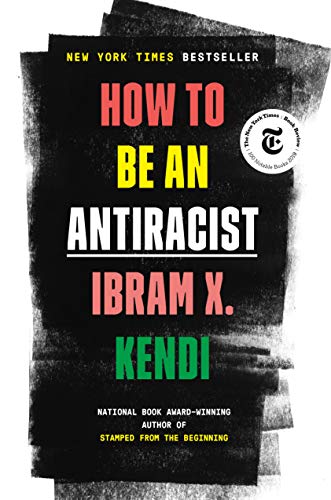
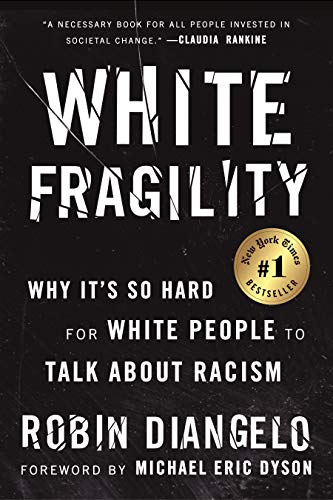

I can hear you arguing with me. You're saying to yourself that things will change. So after you've read the books that the media have advised you to read, what's next? Will you continue to read books so that you understand other cultures? Or will you then say that you don't have time to read books?
Black Lives Matter a lot. But after you understand the key issues and start making changes, why stop there? Why not start reading the world? A world that's waiting for you to explore via the books you read? How cool would it be if you were able to get along with others who are different from you?
In her article “Simple math shows that you have enough time to read 200 books this year,” Jessica Stillman builds a compelling case about how you can find the time to read 200 books in a year.
 She looked at average reading speed, the time people spend watching the television, and on social media sites, and how they can reallocate some of that time to read books.
Finding Time to Read Books
Jessica Stillman’s article in Business Insider reminded me of something that I wrote over 10 years ago. This is what I wrote:
Earl Nightingale in his audio program Lead the Field
, quotes Louis Shores, a librarian, poet, social activist, and maverick educator as saying:
““Each of us must find his own 15-minute period each day for reading. It’s better if it’s regular. The only requirement is the will to read. With it, you can find 15 minutes, no matter how busy the day. That means you will read half a book a week, two books a month, 20 a year and 1,000 in a lifetime.””
In the age of rapid change, reading half a book a week may not be enough. If the average book is 300 pages in length, you could set a target of reading 60 pages each day, reading a book each week. Several reports and articles suggest that the average CEO reads 4 to 5 books each month. You’re thinking that there is no way that you can read 60 pages in one day because there simply isn’t enough hours in a day.
You can do it! There are 365 days in a year, which means that you have 8,760 hours every year. If you sleep eight hours each night, there are 5,840 hours when you are awake. Subtract 2,080 hours for a 40-hour workweek and you are left with 3,760 hours that you can use however you choose.
Couldn’t you take 260 of those hours for yourself to invest in your personal and professional development? That’s just an hour a day, five days a week.
 , quotes Louis Shores, a librarian, poet, social activist, and maverick educator as saying:
And for those who know me, I often explain how to digest the average nonfiction book in 60 minutes. Now, I wanted to continue the conversation where Jessica Stillman left off. In many years, I have read 200 or more books, so I know that it is possible to do so. It's easy for me to do that because reading gives me pleasure. And I'm someone who doesn't watch the television.
It’s important to have different perspectives on books. If you’re not a reader, you can find a synopsis of many books from Readitforme that you can listen to. Click the link to join. This is a great way to learn the latest thinking on many topics.
Developing the Reading Habit
If you want to develop a practice, then you must have a compelling reason for doing so. And if your reason for not reading is because you cannot find the time, then Stillman’s article shows you how to find time. If you're not reading books because you are not interested, then that is another conversation. I would ask the question though,
“Why aren’t you interested in reading?”
Is it because you find reading boring? If that is the case then you could listen to audio books. Explore reading diverse types of books to discover what you like. Start with reading books about topics that interest you. If you love fashion, read about the history of fashion, or even biographies of fashion mavens.
Let's say that you are a business professional, and after reading the Business Insider article, you realize how you can carve out the time to read books. If you are using books as a learning tool, then the type of books you read become very important. The conversation is more than just finding the time to read.
It's also not about fiction versus nonfiction because there are excellent fiction books that teach profound lessons. In fact, Anne Kreamer wrote about the benefits of reading novels in her article “The Business Case for Reading Novels.”
What I'm more concerned about is the level of difficulty of some of the books that you read. Do some of the books make you think? Most of the books that successful people read make them think. I found this to be the case when I interviewed them for my book Tales of People Who Get It. I want you to find time to read books to develop your intellectual capacity. I don't recommend that you only read difficult books because that is mentally draining. And you will abandon reading. Make sure that some of the books you read are for pleasure.
I'll also mention that your vocabulary is very important to reading. The more extensive your vocabulary, the easier it is for you to work your way through difficult text. You read faster because you don't have to spend time trying to figure out what the words on a page mean. And the more you read, the stronger your vocabulary. I also wrote the following over 10 years ago.
Benefits of Building a Strong Vocabulary
Johnson O’Connor, a Harvard-educated engineer, and founder of the Human Engineering Laboratory, now called The Johnson O’Connor Research Foundation, over a 20-year period tested thousands of Americans – of all ages, occupations, and levels of education – in an effort to identify and measure human aptitudes and study their relationship to a knowledge of English vocabulary.
He found that in nearly all cases, vocabulary correlated with executive level and income. In a study, documented in Earl Nightingale’s Lead the Field, O’Connor tested executive and supervisory personnel in 39 large manufacturing plants, and found that:
- Presidents and Vice Presidents averaged 236 out of a possible 272 points
- Managers averaged 168 points
- Superintendents averaged 140 points
- Foremen averaged 114 points
- Floor bosses averaged 86 points
Information obtained directly from The Johnson O’Connor Research Foundation based on an in-depth research study conducted in 1984, shows that company presidents have significantly larger vocabularies than the norm group of clients tested by the Foundation. The Foundation’s clients averaged higher levels of education than the general population and therefore, have significantly higher vocabulary levels. Compared to this norm group, 50 percent of the company presidents scored above the 75th percentile in vocabulary.
In another research study published in 1990, results show that a sample of company managers from across the USA tended to have significantly higher vocabulary levels than the Foundation’s general testing population, but lower levels than company presidents.
These studies provide evidence that a relationship exists between an extensive vocabulary and executive success. The more extensive your vocabulary, the higher you are in the organizational hierarchy. From the studies, The Johnson O’Connor Research Foundation concluded that one’s aptitudes, or natural abilities point the direction for career satisfaction but that vocabulary will affect how far a person is able to go in a chosen career.
In the 1984 and 1990 studies, the Foundation asked the company presidents and managers if they thought that vocabulary building was a useful activity for advancement in the business world, and if they thought that vocabulary knowledge was important in executive work. The response was an overwhelming yes – over 97% answered yes to both questions.

Find Time to Read Books: The Thing With Reading Books
The more you read, the more you know. And the more you know, the more ideas you'll get. One of the right ideas could be a game changer in your life. And if you're someone who loves to take action, you'll find yourself profiting from your reading time. Simply because you apply what you learn, you take action. For over seven years, I've been creating reading challenges to help people to develop the habit of reading. You'll learn how to find time to read books by using effective reading strategies.
If you need help and would like a program that’s already set-up, Join MoreReads: Blueprint to Change the World Today, click the link to buy.
With MoreReads: Blueprint to Change the World you read the world to start developing cultural awareness and sensitivity. On top of that, you'll also be learning other key skills to succeed such as critical thinking, emotional intelligence, problem solving, decision making and creativity.
Find Time to Read Books: Join MoreReads: Blueprint to Change the World
Jessica Stillman in her article showed you how to find time to read books. Professionals already know that reading the right books can contribute to career success. The above shows you the correlation between success and vocabulary. At this time, I would like to invite you to join the MoreReads: Blueprint to Change the world. The requirement is that you read just over one book each week, reading 60 books in a year. This is much less than reading 200 books.
3 Things to Do
Read Simple math shows that you have enough time to read 200 books this year
Join MoreReads: Blueprint to Change the World
Books to Read During Month One of MoreReads: Blueprint to Change the World
One Plus One Equals Three Thinking CriticallyThe Creative HabitHow Professionals Make Decisions


&
[Related Post: Guide to Learning 10 Key Skills to Thrive in 2020 – Month One]
