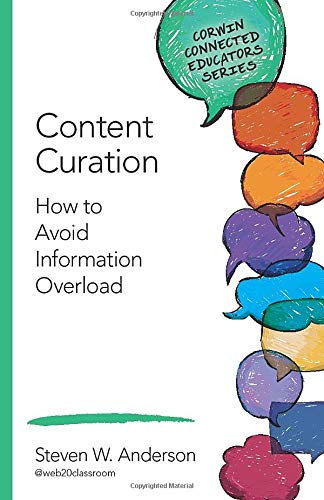
I recently completed a data analytics course that Lighthouse Lab offers. In a previous life, data analysis was a big part of my role as Director of Research. These days, because of so much information, it’s important not only to analyze data, but to also curate information so you can interpret it and make sense of it. You want to be able to tell a story with your data. In January 2017, I read Curate This. I pulled out sections in my notes to write a blog post.
Today, I’m writing a summary of the book because I think the information is important. Before I delve into the text, I want to refresh your memory of the Haystack Method that’s outlined in Non-Obvious Megatrends: How to See What Others Miss and Predict the Future by Rohit Bhargava. I want you to see the model because I think it’s relevant to my summary of Curate This.
5 Components of the Haystack Method
- Gathering: Collect stories and ideas from your interactions with people or with content. I recommend to my readers to read a book a week. You need to curate the ideas you gather from the books you read.
- Aggregating: Take individual ideas and disconnected thoughts and group them together based on bigger ideas. Aggregating means adding meaning to the ideas and stories.
- Elevating: Think about the underlying themes that relate one group of ideas to another, to describe a broader idea of shift. Elevate an idea to make it bigger and more encompassing.
- Naming: Involves describing an elevated idea in an easy-to-understand and memorable way.
- Proving: Ensure that there are enough examples and concrete research to justify why the idea does indeed describe an accelerating present enough to be called a trend.
Have you read?
Non-Obvious Megatrends: How to See What Others Miss and Predict the Future by Rohit Bhargava
What Is Curate This by Steven Rosenbaum About?
“Automation makes things more efficient, more the same, more boring, but humans tend to make things that aren’t exactly the same. The nature of human creation is that it isn’t algorithmic, but it in fact, will have connections and relationships that are both logical and illogical”.
Should robots create content?
In 2029, it’s expected that humans and robots will find a common ground. Algorithms will never be able to curate as effectively as humans. Do you consider yourself a maker? Curators – writer, blogger, journalist, painter, composer, songwriter, and so on – have a voice. Creation is the art of creating something new, coherent, meaningful out of an abundance of related information and ideas.
Are you a leader?
Curation means standing in front of a room and telling an audience to follow you. Great curators see themes, make bold predictions. Do you thrive and explore across media boundaries? The best curators look for ideas across media. They use- many sources.
Curators are hunters and gatherers as well as organizers. They bring order out of chaos. Your curated content must be ready to be shared. Be distinctive and memorable. Have a vision for curating. Do you have a gut for finding/filtering? Curators are constantly searching. They are exploring, searching, and ruthlessly getting rid of things.
What you create should have a unique vision and voice. Being a resource for valuable content makes you valuable. Curators discern patterns and have a defined point of view. A curator’s job is to create logic and meaning in collection of content to create an editorial flow that provides context and meaning. Content curation offers a more engaged interactive form of learning.
7 Best Practices for Content Curators
- Excerpt, Don’t Lift: What’s fair use? How much is too much? Do not cut and paste, summarize
- Attribution: Give credit to the creator.
- Context: Have a context around curated content. Have a point of view.
- Link Back: It’s fair and the right thing to do.
- Images: Read the fine print. Who owns the image?
- No-Follow is a No-No: This doesn’t give credit. That’s not good.
- An Excerpt is an Excerpt: If an article is six pages, use only a paragraph or two.
What about fair use? You shouldn’t hurt the author by sharing their work. Fair use is using somebody else’s work to make a point. Make a new point or idea.
5 Models of Content Curation
- Aggregation: Act of creating the most relevant information about a particular topic into a single location.
- Distillation: Act of curating information into a simpler format. Only the most relevant information is shareable.
- Elevation: Curation with the aim of identifying a longer trend or insight from smaller daily musings posted online.
- Mashups: Taking multiple points of view on an issue, then sharing it in one place. New point of view created by merging existing content.
- Chronology: Curation that brings together historical information organized based on time to show an evolving understanding of a topic.

When you stack the two models against each other, you can see some similarities and differences. Experiment by combining both models!
When you curate content, make sure that you have at least 200 unique words. Produce a variety of fresh content. Curated content must be valuable. Be selective. Curated summaries shouldn’t be cheap if you’re saving a professional time. To add context you must understand the subject.
9 Content Curation Tips
- Build a Monster List: People love listicles because they’re easy to scan.
- Stellar Round-Up Posts: Lists are great for this.
- Be a Name Dropper: People like to feel valued and recognized.
- Craft an Attention-Grabbing Headline: People are looking for excitement. Your headline should get them excited.
- Add Original Input to Provide Context: People like new information, original and cutting-edge would make it even better when adding context, so you don’t have to.
- Think Like a Plastic Surgeon: Aesthetics is everything. Use images to enhance content.
- Borrow Someone Else’s Platform: Boost your work using other platforms. One more content format, SlideShare and YouTube.
- Create More Than One Piece of Content from Each Curation Effort: Multiple pieces from one piece can lead to a video, picture shared and three other texts. This allows you to reach additional platforms.
- Incorporate a Contextually Relevant Call-to-Action: Include a link to another piece of content. Context is key to relevance, respect your audience’s time.

Monetization
To monetize your curated content, you have to get people to stay on your website and click what you want them to. In my case, it would be an Amazon product. You have to own the platform – a self-hosted blog. You don’t own Facebook, YouTube, or LinkedIn. Here are some ways to monetize your curated content.
- Advertising
- Subscriptions
- e-Commerce
Note: If you’re curating in a niche, you can sell your e-book or recommend other books on Amazon.
5 Traits of Successful Curators
- Be Part of the Content Ecosystem: The greatest curators are makers and organizers. The best curated sites have created, contributed, and curated content.
- Follow a Schedule: Audiences are looking for regularity. Post at the same time every day. Consistency and regularity will bring you new readers.
- Embrace: People get information on their platform of choice. Post images on Pinterest, videos on YouTube, and conversations on YouTube.
- Engage and Participate: Reading other people’s content and commenting are good ways to build relationships.
- Share, Don’t Steal: Give attribution, link backs, and credit.
Curation with Text Tools
Scoop.it: Allows you to discover information important to your business, add your thoughts then publish it.
List.ly: Make embedded lists in blog posts easy.
Bundlr: Enable users to select the most relevant information about a particular topic.
How Avil Can Help You!
If you need help and would like a program that’s already set-up to help you read more books, Join MoreReads: Blueprint to Change the World, click the link to buy.
I invite you to Join MoreReads: Blueprint to Change the World that walks you through the process of learning key skills and more. You’ll be reading books to build skills and develop intercultural awareness. Get more reading and learning tips here.
In December 2020, I published two books on Amazon. I would greatly appreciate your support if you bought my two short e-books Read 30 Books in 30 Days Like Francis Bacon and Performance Accelerator Plan: Guide to Learning and Mastering Key Skills for the Future.
Read 30 Books in 30 Days Like Francis Bacon is not about speed reading. It’s about approaching every book differently and reading only the sections that align with your purpose.
The Performance Accelerator Plan book is a stripped-down version of the paid reading challenge of the same name. Obviously, you won’t get all the resources that come with the program that I sell on my website. But if you are a self-directed learner, it will help you tremendously.
If someone clicks on a link and buys something from Amazon, the company will pay me a small commission.