
How to generate creative ideas is on my mind. I'm working on a Creativity, Innovation, and the Art of Getting Ideas course for a membership site. Have you ever looked back at work you previously did? How did you rate it?
I wrote this blog post over 10 years ago. Over the 10 years, I've grown and know so much more than I did back then. How creative are your ideas? How many creative ideas do you get? And what process do you use to generate creative ideas.
According to the World Economic Forum, the ability to think creatively, or generate creative ideas is one of the skills that will give you a competitive edge.
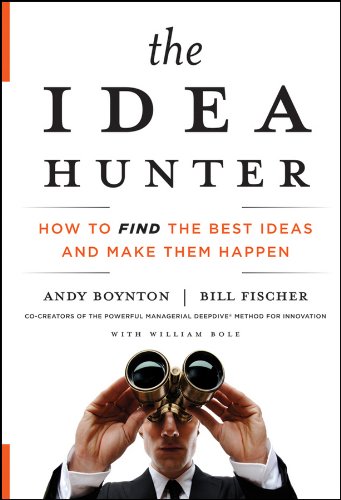
The Idea Hunter The Innovation StackThe MacGyver Secre


How to Generate Creative Ideas
I found myself facing a predicament. You see, I wanted to update this post I wrote more than 10 years ago. Sitting down in front of my computer screen, I was trying to figure out the right strategy to update my work. The ideas that came to me would make it hard for the reader to understand.
It suddenly struck me that the best thing to do was to delete most of what I'd written and start with a more or less clean canvas. There are times in life when you have to leave things behind to move forward.

Originally when I wrote this post, the information I presented was a combination of Graham Wallas' and James Webb Young's creativity models. Ten years later, I've read more than 10 books on the topic. In preparing my Creativity, Innovation, and the Art of Getting Ideas course, I analyzed all the information. Here are the steps I came up with.
Step 1: Have a Purpose, Prepare Your Mind, Gather Information
- Have a purpose for getting a steady pool of ideas.
- Prepare your mind to encounter ideas.
- Every day feed your mind with ‘brainful' media. Examples include TED Talks and How Stuff Works. Attend speeches, lecture series, workshops, seminars and so on that are unrelated to your work just because they interest you. And remember to take notes. Get information from diverse sources. Diverse includes information from various industries, disciplines, countries, and so on.
- Have a process in place to capture ideas from the brainful media you consume every day.
- Define the problem you're trying to solve. Or define your topic of interest.
- Develop a set of decision criteria to judge the quality of ideas.
- Gather as much information as possible about the topic from diverse sources.
- Look for case studies in your industry and unrelated industries.
- Conduct research on the internet.
- Conduct research using commercial databases, you can access many through your public library portal.
- Interview subject matter experts.
- Brainstorm with colleagues.
- Conduct focus group interviews.
- Read all the information gathered and synthesize them.
- Classify the information by sections of the topic of interest.
Have you read?
Non-Obvious Megatrends: How to See What Others Miss and Predict the Future by Rohit Bhargava
Step 2: Working Over the Information in Your Mind
- Look at the information you gathered from many different angles.
- Synthesize the information.
- Merge two facts and see how they fit together.
- Connect the information with what you already know, nothing exists in a vacuum.
- As tentative or partial ideas come to you, no matter how crazy or incomplete, document them.
- Do not stop until you have at least one partial or incomplete idea
- When everything is a jumble or it is pointless for you to do additional work, it is time for the next step.
Step 3: Incubation
- Turn over the problem to your subconscious mind.
- That means to take a break from the task. Do something completely unrelated. Or do something which stimulates the imagination and emotions
Step 4: Illumination – Eureka! I have It
- When you least expect it, the idea comes to you (You have an aha moment).
Step 5: Verification/Implementation/Shaping & Developing the Idea
- The idea will unlikely be ready to be implemented as is.
- Subject it to criticism – test, screen then refine it
- Use the criteria you developed in Stage I to judge the quality of the solution.
- Refine the idea if you have to.
- Implement the idea.
- Evaluate the idea.
- If you find that the solution doesn’t work, go through the process again
Reading a book summary is an excellent way to get the key concepts from business books. It’s also a great way to decide which books to buy to explore more deeply. Click the Readitforme link to join. Think of this subscription as your speed-reading superpower. You read the summary therefore, you can digest and process the book faster. Additionally, read a summary a day to develop your idea muscles.
How to Generate Creative Ideas: Things to Keep in Mind to Develop a Creativity Practice
- Train your mind to become a fertile ground for ideas.
- Every problem has a creative solution.
- Whether you're looking for specific ideas or not, every day search for ideas and write them down. I read articles, books, and book summaries. But also make a habit of looking for ideas to solve the perfect problem. This is a problem that hasn't been solved before. An example could be any problem that arose because of the pandemic.
- See relationships among the diverse sources. In Mentor to Millions, Kevin Harrington recommends that you pay attention to ads, especially the ones that are showing up in different places. I usually skip them, but now I need to look at them with a keen eye.
- Capture ideas and combine them.
- Think about the ideas and let them percolate and collide with each other.
- Test and screen the ideas.
- Implement and validate ideas.

Final Thoughts: How to Generate Creative Ideas to Solve Any Problem
To ensure that you get idea after idea like the most accomplished people, develop the habit of always feeding your mind with ‘brainful' media. Don't just read bestsellers that are saying the same things. Add some books that are off the beaten path. Develop the practice of doing what others aren't doing.
Go online and search for magazine portals. Choose a few magazines from other industries to read. If you subscribe to book summaries, don't just read summaries of business books. Look at series of books about big ideas simply explained.
How You Can Support Avil
Digest 30 Books in 30 DaysI have two products that will help you to be smarter than your peers. One is a book that you can purchase on Amazon. And the other is the MoreReads: Blueprint to Change the World program I created to help you learn the skills the World Economic Forum says you need to thrive up to 2025. You can buy the program on my website.MoreReads: Blueprint to Change the World


For the MoreReads program, you'll go through the process of picking out the big ideas from the books you read. And you'll also learn how to combine ideas to make them bigger and better.
You're encouraged to always tie the ideas to a human need – a hot button. I advocate that professionals profit from their reading time. Click on the link in the yellow box below or the Buy Now link to the left to buy the MoreReads program. Thank you for supporting me and my work.
The most accomplished people use books as problem solving tools. They carve out the time in their schedule to find solutions in the pages of a book. Let me help you to solve your own problems. Additionally, this program helps you to learn valuable career skills. Click the link MoreReads: Blueprint to Change the World to buy.
The Science BookThe Politics BookThe Medicine BookThe Sherlock Holmes BookThe History Book
If someone clicks on a link and buys something from Amazon, the company will pay me a small commission. First published in April 2010
