
Maria Mitchell was a badass woman, who had a lot of firsts in her life. She was the first female astronomer in the United States and the first internationally recognized female scientist. Mitchell was the first woman to be elected to the American Philosophical Society and American Academy of Arts and Science. And she founded the Association for the Advancement of Women, serving as its president for two years. Mitchell also discovered a telescopic comet.
Name: Maria Mitchell
Birth Date: August 1818 – June 1889
Job Functions: Astronomer, Educator and Advocate for Women’s Education
Fields: Astronomy
Known For: First Woman Astronomer in the US and First Internationally Recognized Female Scientist
Why Maria Mitchell is a Badass Woman
- When Maria Mitchell was 17 years old, she opened her own school and had a very unconventional approach to teaching. Her students arrived early – before dawn – so they could observe bird. And sometimes they stayed very late so they could observe the planets and the stars.
- On October 1, 1847, she discovered a new comet, which was named after her, “Miss Mitchell's Comet.”
- The King of Denmark awarded her a gold medal for the discovery, gaining international recognition.
- When Maria was appointed to the position at US Nautical Almanac Office, a group of American women presented her with a new telescope, recognizing her stellar accomplishments.
- Maria capitalized on the many opportunities that presented themselves. When asked to chaperone the daughter of a wealthy banker to Europe, she said yes. To prepare for this trip – from 1857 to 1858 – she got many letters of introduction to meet European scientists.
- In 1865, Maria Mitchell accepted a position to be the first professor of astronomy, and director of the observatory at Vassar College.
- This was a new institution dedicated to women’s higher learning. She is credited for making the institution a success because she was the only faculty member who was widely known around the world.
- In 1873 she founded the Association for the Advancement of Women.

Mini Biography of Maria Mitchell
Maria Mitchell was the third of 10 children and was mainly educated by her father. In the early nineteenth century, women weren’t allowed to work by themselves in science. They had to work with their fathers, brothers, husbands and so on. William Mitchell, Maria's father was determined that she should have the same level of education as her brothers because he believed that a girl’s education should be comparable to those given to boys.
William Mitchell had a passion for observing the heavens so all his children had the opportunity to be his assistants. At a very early age, Maria learned how to use a sextant, a navigational device. She learned astronomy and mathematics while being her father’s helper.
During this time as her father’s assistant, they used their observations to check the chronometer of whaling ships. She also helped him to calculate the exact moment of the annual eclipse of the sun. Like most people who have attained great degrees of professional success, Maria was extremely curious. When she was fours years old, she attended Elizabeth Gardener's private elementary school, after which she went to a school ran by her father.
William Mitchell had a heavy emphasis on observing nature, which was the foundation for his daughter’s stellar career. For instance, he stressed fieldwork, “collecting stone, shells, seaweed and flowers,” and observing, essentially what is now called biomimicry (The Biomimicry Institute), the study of nature. After William Mitchell gave up his school, Maria Mitchell went to a school for “young ladies.” Her formal education ended when she was sixteen years old, but her informal education continued for life.

In 1835, when Maria was 17 years old, she opened her own school and had a very unconventional approach to teaching. Her students arrived early – before dawn – so they could observe birds. And sometimes they stayed very late so they could observe the planets and the stars. The following year, the Nantucket Athenaeum offered her a position of librarian which allowed her to continue her self-education. Maria remained in this position for 20 years.
When she was 18, Maria also worked with her father who made astronomical observations for the US Coast Survey. Together, both father and daughter, observed thousands of meridian altitudes of stars to determine time, latitude and longitude.
On one of these evenings working together, on October 1, 1847, Mitchell discovered a new comet, which was named after her, “Miss Mitchell's Comet.” The King of Denmark awarded her a gold medal for the discovery and she gained international recognition.
In 1848, Mitchell was elected as an honorary member of the American Academy of Arts and Science, the first woman to hold that position. Louis Agassiz, a well-known naturalist and geologist proposed that Mitchell should be a member.
For 19 years, from 1849 to 1968, Mitchell worked for the US Nautical Almanac Office making computations to accurately determine time, latitude and longitude. When Maria was appointed to this position, she was presented with a new telescope by a group of American women who recognized her stellar accomplishments.
Maria capitalized on the many opportunities that presented themselves. She was asked to chaperone the daughter of a wealthy banker to Europe and she said yes. Mitchell prepared for this trip by getting many letters of introduction to meet European scientists.
While in Europe, from 1857 to 1858, she visited observatories across the continent. In England, she met with 77-year old Mary Somerville, physicist and astronomer, who had also been a mentor to Ada Lovelace (first computer programmer). Somerville was a friend of Charles Babbage (designed the first computer which Lovelace programmed). This meeting was the high point of Mitchell’s trip.
In 1865, Maria Mitchell accepted a position to be the first professor of astronomy, and director of the observatory at Vassar College. This was a new institution dedicated to women’s higher learning. She is credited for making the institution a success because she was the only faculty member who was widely known around the world.
Instead of lectures in her astronomy courses, Maria stressed small classes that she could provide individual attention to her students. She emphasized that they learn by observation and not by rote. And she was committed to women’s education. In 1873 she founded the Association for the Advancement of Women. She tirelessly advocated for the recognition of women’s scientific abilities.
It is worthy to note, that the Vassar College Observatory which was built for Maria Mitchell had her original telescope until 1964, which was then donated to the Smithsonian Institution.
In 1869, Mitchell was elected to the American Philosophical Society, the first women to be honoured, and in 1873 she was elected as Vice President of the American Social Science Association. Maria Mitchell was a scientist and educator who helped to break down barriers to women’s education in science. She was a symbol of what women could become in the academic world if given the opportunities and encouragement that they can do it.
Maria Mitchell’s Steps to Success
- Mitchell’s father was determined that she should get the same education offered her as any boy, and he endeavoured to make it happen.
- Had practical experience and employable skills. The time spent as her father’s assistant, qualified her for later positions.
- Mitchell learned through the power of observation, and used that same method when training women as scientists.
- Believed in lifelong learning, and practiced it. Mitchell spent countless hours with her father gaining experience in astronomy.
- Knew how to say “Yes” and accepted the many opportunities that presented themselves, even the unusual one of being a chaperone. Mitchell recognized that the position would allow her to meet European scientists as well as to visit observatories across Europe.
- Advocated for the recognition of women’s scientific abilities and while so doing opened the doors for women scientists including herself.

Lessons from Maria Mitchell
- Opportunities are everywhere if we stop to take a look.
- In helping others, you often help yourself.
- Education is a lifelong practice.
Further Reading: Articles About Maria Mitchell
Maria Mitchell Association (http://www.mmo.org)
(http://www.lucidcafe.com/library/95aug/mitchell.html)
(http://www.nndb.com/people/676/000165181/)
Works Cited/Referenced
Encyclopedia of World Biography
American Women Writers
Science and its Times, Volume 5, “Women Scientists in the Nineteenth-Century Physical Sciences
Science and its Times, Women in Space
Mathematics
Complete Dictionary of Scientific Biography
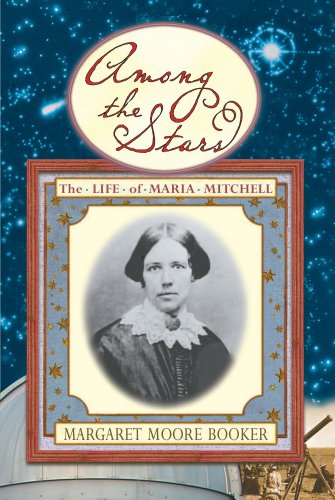
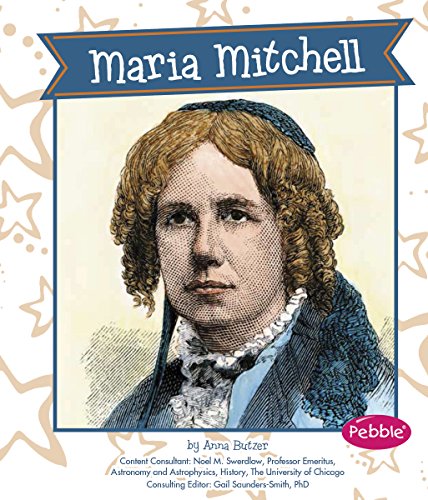
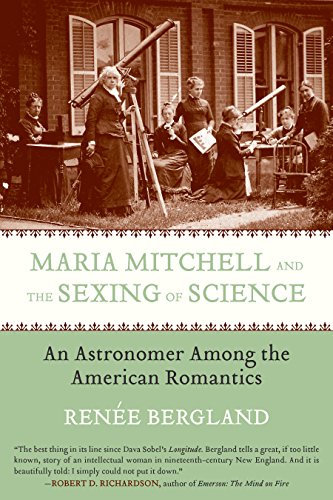
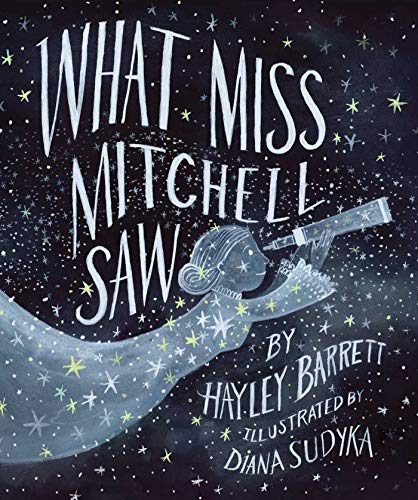
Among the Stars: The Life of Maria Mitchell Maria's CometMaria Mitchell (Great Women in History)Maria Mitchell and the Sexing of ScienceMaria Mitchell: The Soul of an AstronomerWhat Miss Mitchell Saw

This post contains affiliate links and The Invisible Mentor® may earn commissions for purchases made through links in this post. For more details see here. Thank you so much for your support! First Published July 2012.
