
Digest 30 Books in 30 Days Selective reading vs reading the entire book. Which do you feel most comfortable doing?
How do you typically read a nonfiction book? Do you grab the information you need and move on to the next book? Or do you read it cover to cover savoring the words on the page? I think that selective reading is better than reading a book cover-to-cover.
I know that many people will disagree with me, and that’s okay. It’s what I believe and I’ll stick to that belief. I have another question for you. Looking back to the last 10 nonfiction books that you read, can you now honestly say that each of the 10 books deserved the time you invested in reading them?
I’m betting that you cannot answer yes to the question.

As far as I’m concerned, most books are longer than they need to be. They’re packed with fillers and fluff. A big part of the problem is that traditional publishers have word counts. Therefore, authors have to find a way to satisfy the word count to get published. And therein lies the problem.
What I’m saying goes against the grain. Many influencers on social media publish the books they read, their notes and even the highlights. If what they do gets more people reading, then I value that. My goal is also to get more people reading. However, I want more people to be reading intelligently, getting what they need from the book and be done with it.
Why would you want to read 100 percent of a book when let’s say 20 percent will give you what you need?
“It’s one of the silliest things in the world, in my opinion, for people to feel they need to finish a book.” Patrick Collison, co-founder of Stripe
A few years ago, I researched selective and strategic reading to see if there was such a thing. And I was happy that I was able to find definitions for both terms.
Have you read?
Selective Reading: What Books to Read and Which Sections to Read
Definition of Selective Reading?
“Selective reading is a process of reading with purpose, instead of running through a text that might have no practical and esthetic value to you. Reading with purpose will mean only reading the texts that keep the useful information. Useful not necessarily stands for “boring”, you can select any book that carries the knowledge you were craving to gain but thought you have no time for. It develops the ability to select the most important information from the whole text instead of “swallowing” everything without chewing.”
Definition of Strategic Reading?
“Strategic Reading is a process of constructing meaning by interacting with text; as individuals read, they use their prior knowledge along with clues from the text to construct meaning. Research indicates that effective or expert readers are strategic (Baker & Brown, 1984a, 1984b). This means that they have purposes for their reading and adjust their reading to each purpose and for each reading task. Strategic readers use a variety of strategies and skills as they construct meaning (Paris, Wasik, & Turner, 1991).”
Source: https://www.eduplace.com/rdg/res/literacy/st_read0.html
What I teach readers to do is a combination of both selective and strategic reading. I believe that professionals need to change their definition of what it means to read a book.
Nonfiction Books as Problem Solving Tools
One of the first places to change your definition of what it means to read a book, is to view a nonfiction book as a problem solving tool. You read it to find solutions. When you find what you’re looking for, put it aside. If later you have to get more information, you can always dive into the book again.
Additionally, for the 20 percent of the book that you choose to chew and digest, make sure that you understand the information. Tie the information you’re reading to what you already know. You’re integrating the new information with the old. This takes your reading to a whole new level. Now you’ll have richer information on a topic.
The most highly accomplished people do this. Imagine how many books you could digest if you approached reading books this way.
How to Read Books Selectively and Strategically
From both definitions, your purpose plays a big part in how you decide to read a book. In How to Read a Book, the authors, Mortimer Adler and Charles Van Doren say there are three reasons for reading.
- Entertainment
- Information
- Knowledge.
Selective and strategic reading is meant for when you’re reading for information and knowledge.To use selective and strategic reading as strategies to get more from your reading, it starts with having a purpose for reading. Once you have a clear one-sentence purpose for reading, the next step is to preview the book to determine which sections to read to get what you need from it. You want to discover which 20 percent of the book to read.
Selective Reading: How to Preview a Book
Before you read, prepare your mind. Do 10 jumping jacks and 10 marching bands. You can also search for brain gym exercises, these types of exercises connect the right and left sides of the brain. After you’ve prepared your mind for reading, write down the questions that you want the book to answer. What do you want the author to tell you.
Preview every nonfiction book before you start to read it. This should take 30 – 60 minutes. Set a timer for 60 minutes. Here’s what previewing a book entails:
- Read the Preface, Foreword, Introduction.
- Review the Table of Contents.
- Place a check mark beside the chapters and sectors that you want to explore more deeply. You also want to read the sections that align with your reason for reading the book. That’s why having a purpose is so important.
- Scan the Index. The terms with the most references tell you what the author considers important.
- Read the Book Description.
- Write down the main idea of the book and everything you know about the topic. The main idea is often found in the introduction of the book.
- Read sections of the book that you think needs further exploration.
- Make note of the important information, especially information that answers your questions.
- Tie what you’re reading to what you already know.
- Decision time. Does the book need further exploration? If not, you’re done with it.

What Does This Mean?
If you got what you needed from the book, you’re done with it. You read the book in your own way. Don’t waste your time following the masses. After you finish with the book, review your notes a few times. Test your knowledge of the content of the book. Even if you spent only 30 minutes on the book, you’d be surprised by how much information you can gather in that time.
Several years ago, before I became a more sophisticated reader, after I read the introduction of some books, I felt like I’d read the book. Instead of stopping there, I read the entire book. Looking back, it was wasted time. I learned a few things that were not in the Introduction, but 80 percent of what I needed to know were in the sections I previewed. But I didn't know about the concept of selective reading. However, life is about learning lessons and evolving.
I also want to say that you read as much of a book as you need to, to understand its content. No less, no more. It makes no sense to rush through a book and not understand it.
Is Selective Reading Better Than Reading the Entire Book?
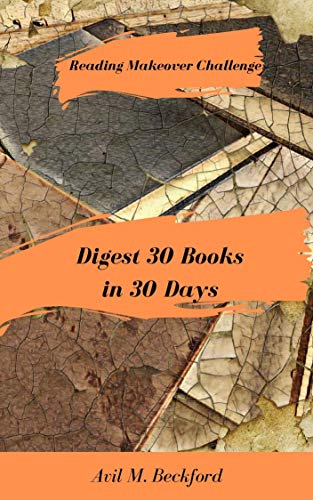
As I mentioned before, I think selectively reading a book is better than reading the whole book. But it’s not about me, it’s about you. You have to figure out what reading strategy is best for you. What I advise you to do, is to treat each book individually. That's what I do. I read as much of or as little of a book, depending on my purpose for reading the book in the first place. Buy my book, Digest 30 Books in 30 Days:Reading Makeover Challenge. Learn how to read selectively and strategically.
If someone clicks on a link and buys something from Amazon, the company will pay me a small commission.
