
 Introduction to Alfred Nobel: 7 Lessons From the Man Who Funded the Nobel Prizes
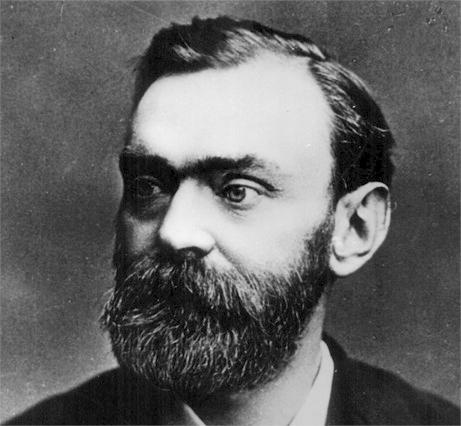
Many people have heard of the Nobel Prizes, and some will assume that they were named after some guy or girl named Nobel. And yes you would be correct, his name was Alfred Nobel (1833 – 1896), and he was born in Stockholm. Nobel is also the person who invented dynamite and other detonating devices.
Who is Alfred Nobel?
Alfred Nobel is one of the 100 scientists mentioned in Quantum Leaps: 100 Scientists Who Changed the World by Jon Balchin. He was chosen not so much for his scientific contributions, but because he left most of the wealth- from the success of selling dynamite, and investing in his brothers' oil company – to fund a series of awards for peace, literature and science. The prizes are awarded every year as stipulated in Nobel's will.
When one of Nobel's brothers died, the press thought it was him and ostracized him for inventing dynamite. That was one of the reasons he decided to create the Noble Prizes. According to Wikipedia,
“In 1888 Alfred's brother Ludvig died while visiting Cannes and a French newspaper erroneously published Alfred's obituary.[2] It condemned him for his invention of dynamite and is said to have brought about his decision to leave a better legacy after his death.[2][3] The obituary stated Le marchand de la mort est mort (“The merchant of death is dead”)[2] and went on to say, ‘Dr. Alfred Nobel, who became rich by finding ways to kill more people faster than ever before, died yesterday.'”
Other Alfred Nobel Facts
 Spoke multiple languages: Russian, French, German, Swedish, Italian and English
- He studied chemistry is the United States for four years
- While working with the unstable nitroglycerin, there was an explosion at Nobel's factory which killed five people, one if which was his brother. He wasn't granted another permit to rebuild the factory, so he worked on a barge and invented a safe way to handle the unstable chemical. Dynamite was born.
- Obtained over 350 patents in various countries.
- Invented silk, artificial leather, the blasting cap.
Lessons from Alfred Nobel
- Persistence pays.
- If you are determined, you can achieve your goals even with a lot less.
- Learn another language, we live in an age where the world is our stage. (I have to take refresher's courses in Spanish and French)
- We are here to serve, so do good with what you have.
- Don't wait until you are severely criticized before you re-evaluate your life, most successful individuals have regular check ins with themselves to determine if they are on track.
- Travel if you get the opportunity, so that you can learn from and about other cultures. Nobel traveled to and lived in different places – Sweden, Germany, France, Russia.
Stephanie MacKendrick, former President of the Canadian Women in Communications always says that women only apply for jobs if they have most of the stated requirements, but men apply if they have at least 50 percent because they assume that they have other skills that the company will need. And, they are absolutely correct.
What does this have to do with Alfred Nobel you might ask? Nobel was chosen as one of the 100 scientists who changed the world, not for his scientific contribution to the world, but because many scientists whose contributions changed the world, won prizes in his honor.
That is, they won Nobel Prizes. The lesson, apply for the jobs, grants, enter the competitions even if you have only 50 percent of the stated requirements because you never know.
The Lessons Learned series is a way for you to build your general knowledge to help you become more creative. It's also a way for you to find possible invisible mentors.
Alfred Nobel: The Man Behind the Peace Prize (True Stories) Alfred Nobel: A BiographyThe Nobel Prize: A History of Genius, Controversy, and PrestigeAlfred Nobel for KidsAlfred Nobel: Inventive Thinker (Great Life Stories: Inventors and Scientists)Nobel: Dynamite and Peace


